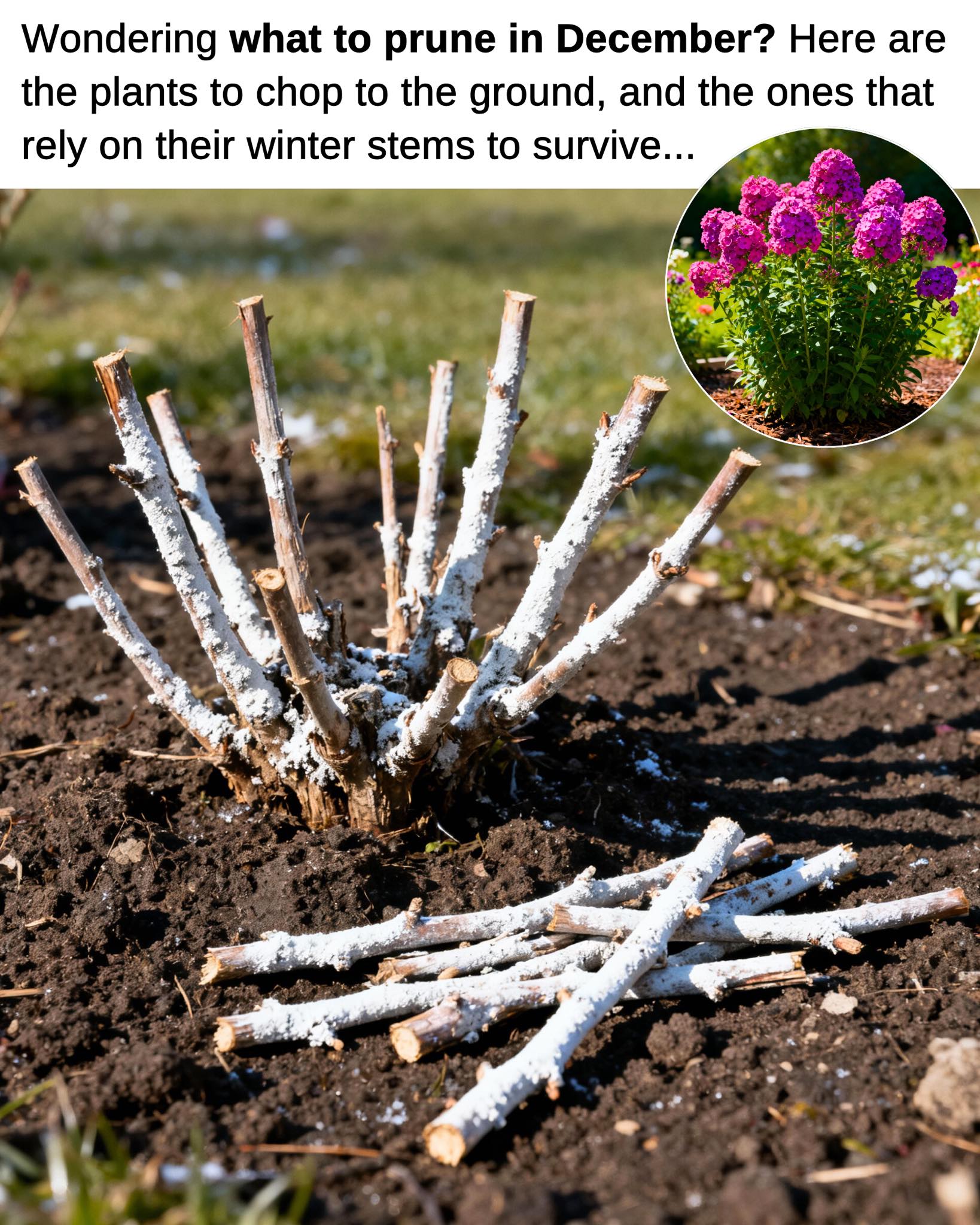

Right about now, Peonies (herbaceous peonies only!), Garden Phlox, and Bee Balm wallow in self-pity over their damp-rag looks. And worse, they’re sheltering invisible squatters.
The usual suspects, like that trio, simply must finish the growing season covered in powdery mildew. It’s like they’ve been dusted with flour. Yet don’t blame the cat, it’s innocent (this time).
Chop their stems right down to a couple of inches above the ground. Collect and discard every single bit of the affected debris. Do NOT compost it. Yucky fungal spores count on it.
Quick tip: Any branch on any shrub or tree that appears brown or shriveled (or obviously dead) waves a welcome sign for pests and rot. Dead wood never helped anyone, so make it disappear!
Cut the 3D stems (you know, the dead, diseased, or damaged) back cleanly to healthy wood. If rot creeps into the healthy parts of the plant, you’ll turn a small problem into an expensive one. And you need money to buy generic stuff that will come back to you from someone else next year.
2: Apples, Pears & Berry Bushes for Better Harvests

If your fruit tree crowns look too thick, they are too thick. And if they are too thick, the fruits won’t get the sunlight or proper ventilation. Result? Free Halloween decorations next year.
Those in need of this aggressive scheduling are your pome fruits (apples and pears), along with any unruly currants or gooseberries. Thin them in a way that allows light into the center (think about an open wine glass; it helps, even when it’s empty).
Plus, if you grow them, you need to remove all the old, brown raspberry canes that produced fruit this year, as they’ve already packed their stuff, given their notice, and are not coming back. This applies to the spent brown canes, not the new green primocanes!
If you want a full breakdown of which fruit trees respond best to winter pruning, here’s our guide to fruit trees you should prune in December. It’s super helpful if you’re unsure what’s safe to cut right now.
