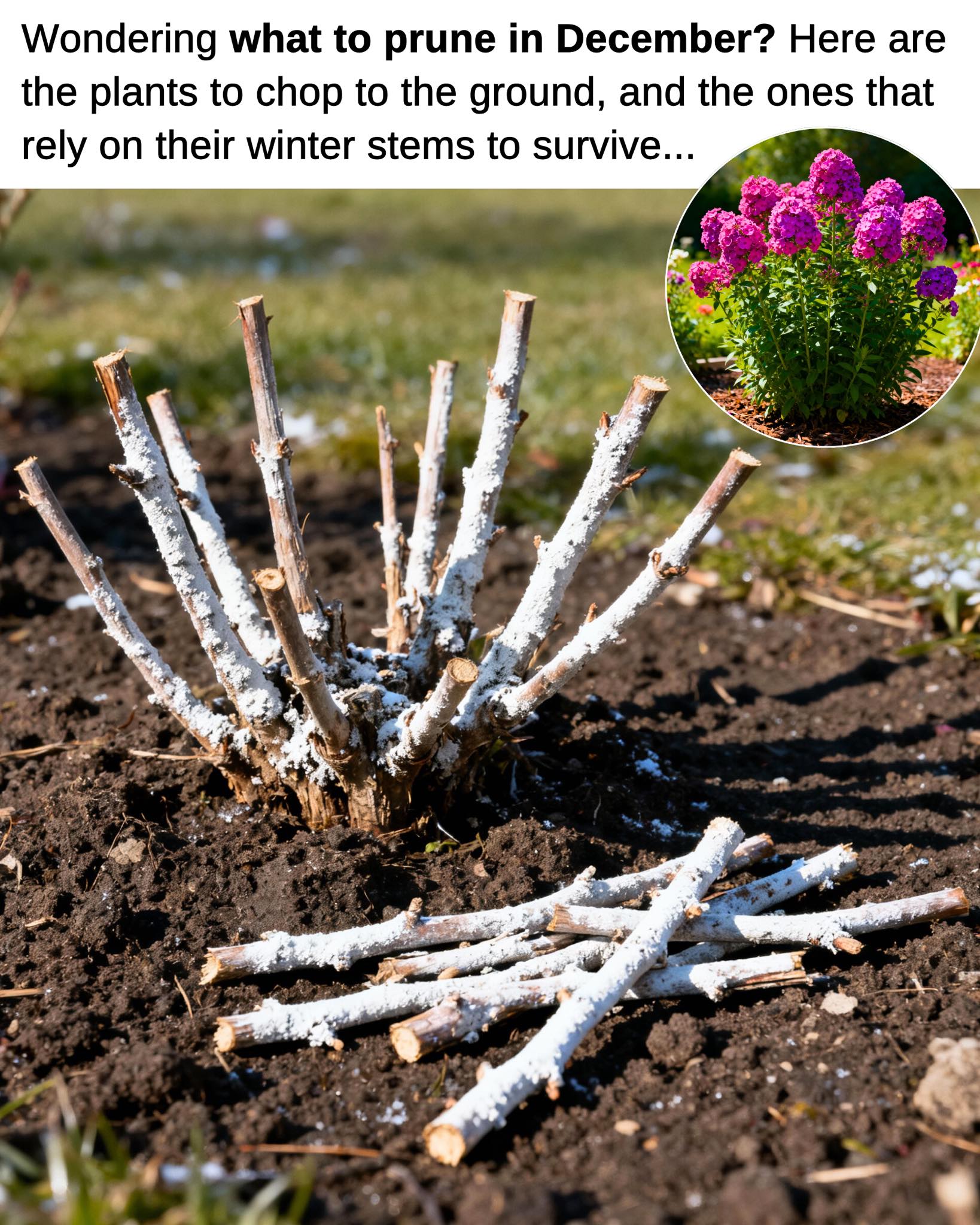

Trigger warning. Prepare to read about Grapevines and Wisteria losing their very life force. About them weeping or ‘bleeding’ excessively after being cut back too late in winter.
Rapid and alarming loss of sap is why waiting is not an option. Thankfully, December is giving you the perfect window to set up their happy ending.
If you’re working through your fall cleanup and aren’t sure what should’ve been cut earlier in the season, here’s my full guide to which perennials you should cut back before winter (and which to leave standing).
Plants NOT to Cut Back!

Welcome to my favorite part of December: the ‘It’s for the birds’ justification section. (Spoiler: It actually is for the birds.)
If you have shrubs that really struggle with winter winds and freezing nights, take a peek at our guide to 9 shrubs you should wrap or protect before winter, it’s a life saver for tender buds.
1: For Wildlife Support

Untidiness here translates to a crucial winter habitat and an emergency grocery store.
So leave the faded heads on plants like Coneflowers, Black-Eyed Susans, and Sunflowers untouched! Dried seeds are a bird feeder you don’t have to refill for finches and other lovely little birds.
Do not prematurely clear out the spent Fennel or Angelica, either. Even if you trim seed heads to reduce self-seeding, keep the hollow stems in place for shelter!
Their tall, dried-out, and hollow stems and foliage provide shelter for the tiny good guys who will eat your aphids in spring. Go team Ladybugs! And team Lacewings!
2: For Bud Protection

One of the plants that design their own winter jackets is the macrophylla variety of Hydrangea, which blooms on old wood. Its old flower heads protect the new flower buds set right below them.
Quick reminder: You can give them a trim later, but only after the season’s last cold snap passes in early spring.
If you grow tender perennials whose crowns struggle in the cold, like Dahlias, you have two options.
I like to dig mine up for winter, but if you overwinter yours in the ground, clear away the soggy leaves that cause rot and let the remaining top growth cushion the tubers against the worst chills.
And if you’re unsure which to lift or leave, here’s our full guide which bulbs actually need lifting before winter (and which are fine staying in the soil).
