Preheat the oven to 170°C (fan-forced). This temperature ensures that the cookies will bake evenly, developing a light and golden color while maintaining their soft texture. It’s important to preheat the oven fully before placing the cookies inside to achieve the right consistency and prevent them from spreading too much during baking.
Line two baking trays with parchment paper. The parchment paper will prevent the cookies from sticking and provide easy removal after baking. It also helps distribute heat evenly across the cookies, ensuring they bake uniformly. Make sure to spread the parchment paper across the trays without any wrinkles.
In a large mixing bowl, cream together the softened butter, caster sugar, and vanilla extract. Use an electric mixer or a whisk to beat the ingredients until the mixture becomes pale and fluffy. This process incorporates air into the butter, which helps create light, airy cookies. Be patient during this step, as it’s crucial for achieving the desired texture in the finished cookie.
Once the butter-sugar mixture is light and fluffy, add the two large eggs one at a time. Beat well after each addition to ensure the eggs are fully incorporated into the batter. This gradual process helps prevent the mixture from curdling and ensures a smooth batter.
Next, sift the self-raising flour over the bowl to ensure there are no lumps, and fold it into the batter. Alternate adding the sifted flour with the milk, folding gently after each addition. Be careful not to overmix at this stage; folding helps maintain the airiness of the batter while ensuring it remains smooth and soft. The final batter should be thick but spreadable.
Using a spoon, drop heaped teaspoons of batter onto the prepared baking trays. Space each mound of batter about 3 cm apart to allow the cookies to spread slightly as they bake. You can use a cookie scoop for uniform-sized cookies, ensuring an even bake.
Bake the cookies in the preheated oven for 8–10 minutes, or until they are lightly golden and springy to the touch. The cookies should not be overly browned, as they are meant to remain soft in the center. If you gently press the top of a cookie, it should bounce back. Keep an eye on the cookies as oven temperatures may vary slightly.
Once baked, transfer the cookies to a wire rack to cool completely. This step ensures the cookies retain their light texture and prevents them from becoming soggy. Allow them to cool fully before filling them to ensure the filling doesn’t melt into the cookie.
Make the Passionfruit Cream Filling
While the cookies are cooling, prepare the passionfruit cream filling. Begin by beating the softened butter in a mixing bowl until it becomes light and creamy. This process should take a few minutes, and the butter should be smooth and fluffy before moving on to the next step.
Gradually add the sifted icing sugar mixture to the butter, a little at a time. Continue beating until the mixture is smooth and creamy. This gradual addition of sugar ensures that the filling is not gritty and helps the butter incorporate the sugar evenly, creating a silky texture.
Stir in the passionfruit pulp and lemon juice (if using). The passionfruit pulp provides a tangy, fruity flavor that complements the buttery filling. Stir until well combined, making sure the pulp is evenly distributed throughout the cream. If you prefer a more tangy filling, the lemon juice will enhance the flavor of the passionfruit. However, it’s optional, as the passionfruit itself already provides a wonderful balance of tartness and sweetness.
Assemble the Cookies
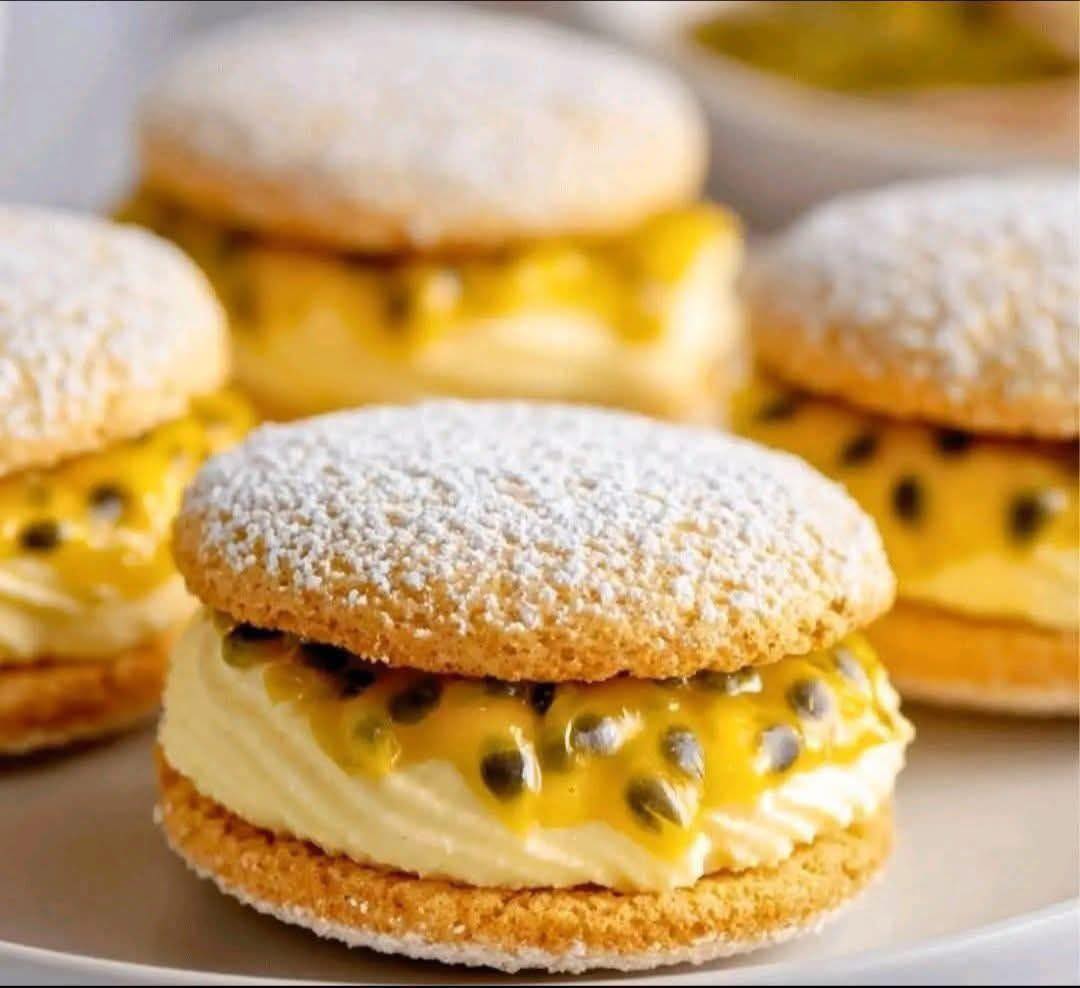
Once the cookies have cooled, take one cookie and spread or pipe a generous amount of the passionfruit cream on the flat side of the cookie. You can use a spoon to spread the cream or a piping bag for a more decorative effect. Be sure to apply a thick, even layer of the cream, but don’t overfill, as the cream will spill out when the second cookie is pressed on top.
Top with a second cookie, pressing gently to sandwich the cream filling between the two sponge cookies. Make sure the edges are aligned, and the cookies are gently pressed together to secure the filling without making a mess. The cookies should stick together well, and the filling should peek out slightly from the sides.