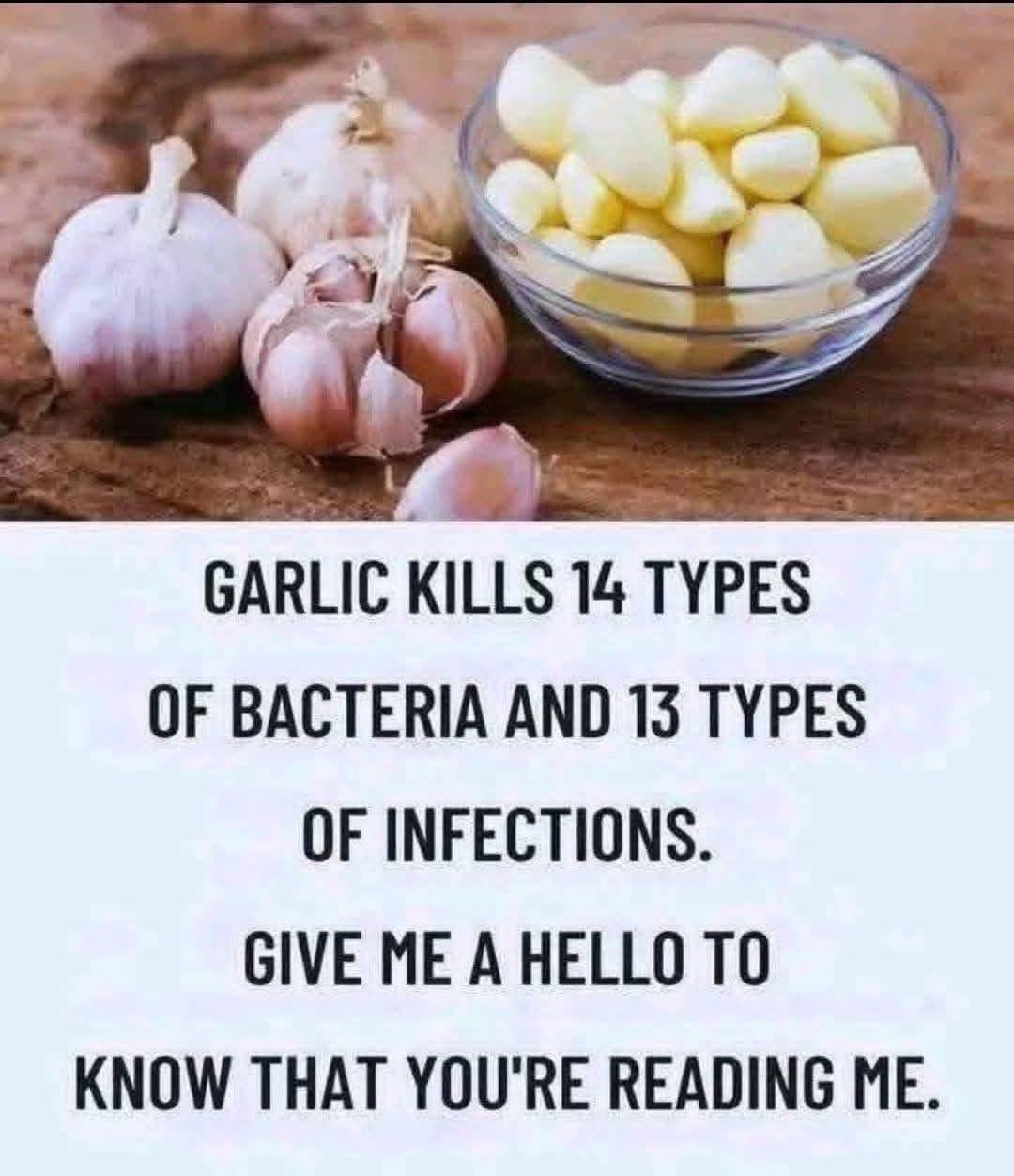
That’s a very powerful and commonly shared statement, and it points to a real and well-documented scientific truth: garlic has remarkable antimicrobial properties.
However, it’s important to understand the context and the science behind this claim, as it’s often oversimplified.
The Science Behind the Claim
The primary active compound in garlic is allicin. When garlic is chopped, crushed, or chewed, an enzyme called alliinase converts the compound alliin into allicin. Allicin is a potent antimicrobial and antifungal agent.
Here is what scientific research actually shows:
- Broad-Spectrum Activity: Studies in vitro (in a petri dish) have confirmed that garlic and allicin extracts can inhibit the growth of a wide range of:
· Bacteria: Including E. coli, Salmonella, Staphylococcus aureus (including MRSA), Helicobacter pylori, and Pseudomonas aeruginosa.
· Fungi: Such as Candida albicans.
· Viruses: Some studies show it may have activity against viruses like influenza, though this is less established. - The “14 Bacteria and 13 Infections” Specificity: The exact numbers “14” and “13” are popularized figures, likely from specific studies or compiled lists. The exact count isn’t as important as the proven principle: garlic has broad-spectrum antimicrobial effects against many pathogens.
While the core fact is true, the statement “Garlic Kills 14 Types of Bacteria and 13 Types of Infections” is problematic because it lacks critical context.
