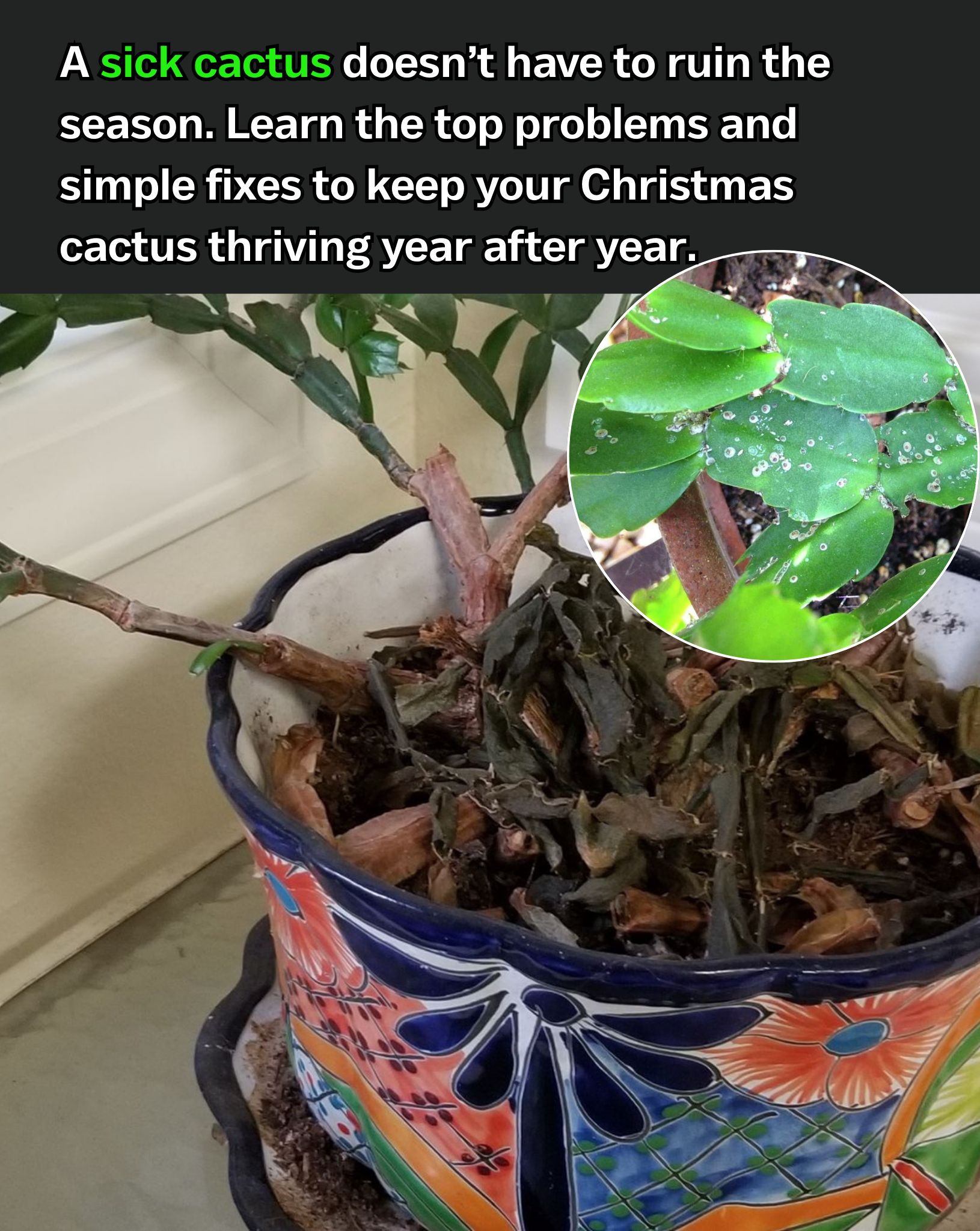
Treating is very similar to prevention, so your first goal is to improve air circulation around the plant.
For an already infected holiday cactus, remove all the diseased tissue and dispose of it (don’t add it to your compost pile).
Make sure you sanitize your cutting tools, watering cans, or any other tools you use.
If the disease progresses, you can treat your Christmas cactus with a fungicide.
4. Powdery Mildew
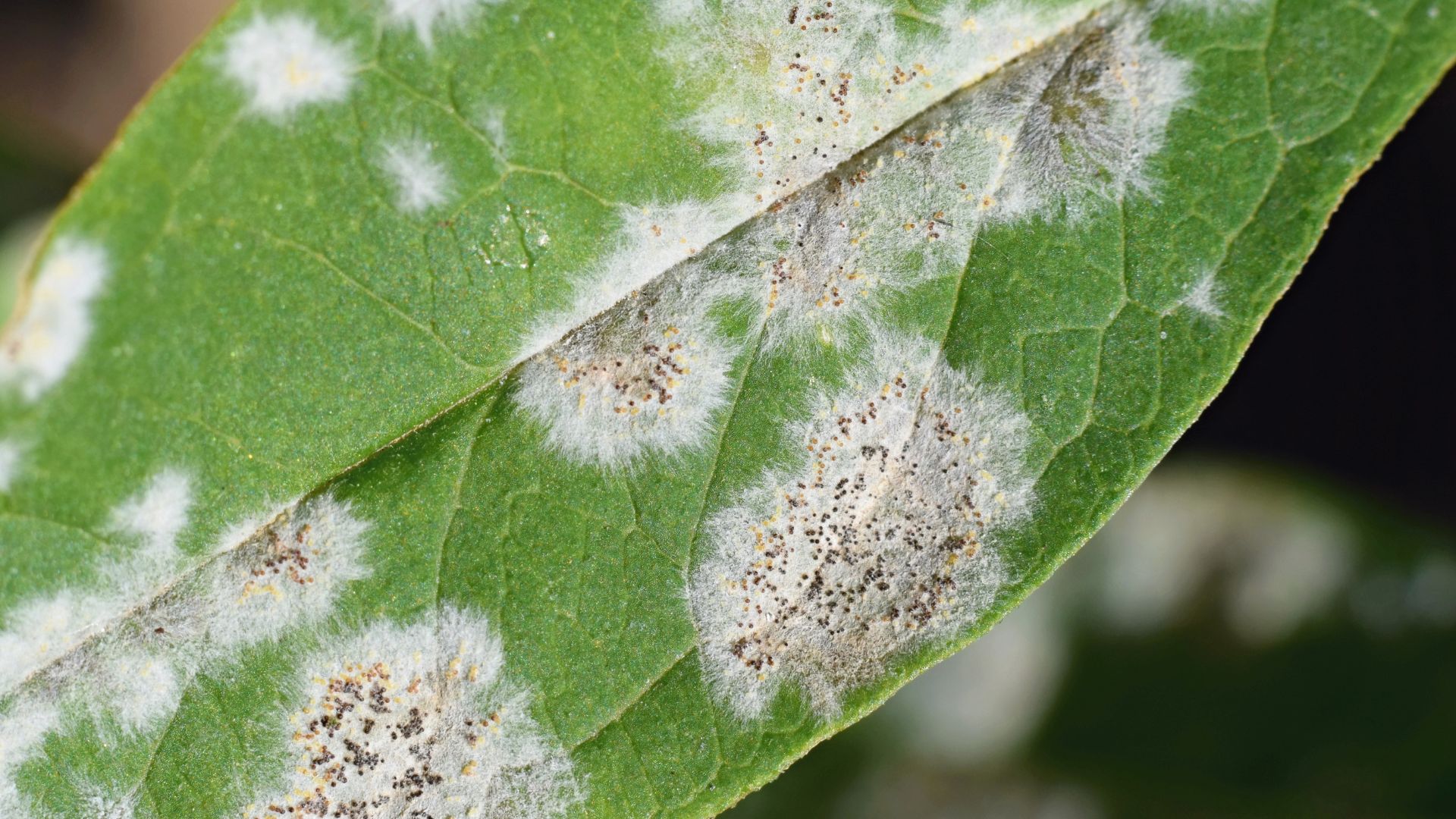
If you have an outdoor garden, I’m sure you’ve already heard of powdery mildew. (4) Luckily, this disease isn’t dangerous and you can easily fix it if you treat it in time.
How To Identify
The telltale sign of powdery mildew in Christmas cactus is a white powderish substance on all plant parts and the soil surface.
In some cases, leaves on your holiday cactus can display rust-colored spots.
How To Prevent
The ideal environment for this disease is humid, damp, and shady. First, promote air circulation around your Christmas cactus and keep it away from other houseplants.
Second, water only at the plant base because watering over the foliage leads to various diseases, not only powdery mildew.
And third, make sure your Christmas cactus receives enough bright indirect sunlight; if you keep it outdoors, don’t place it in shady spots.
How To Treat
This disease most likely won’t kill your Christmas cactus and one of the ways to treat it is to apply neem oil or copper fungicide.
If you decide on one of these solutions, you must apply them according to the instructions on the label.
5. Necrotic Spot Virus
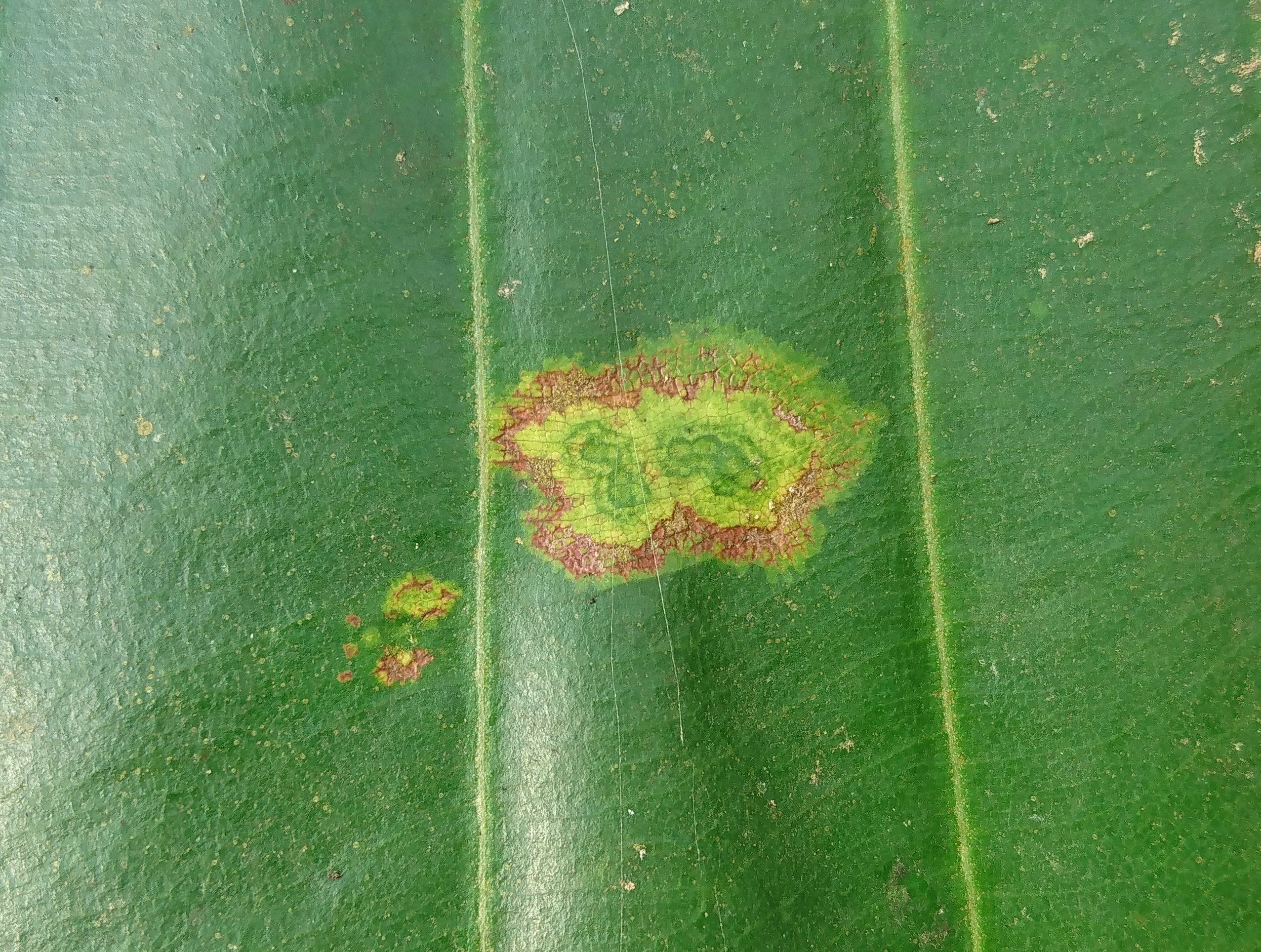
This is one of the most dangerous Christmas cactus diseases and the main culprit is thrips. (5)
How To Identify
One of the most common signs of Necrotic spot virus in holiday cactus is yellow foliage.
If the thrips continue feeding on the plant, the stems and leaves will also wilt.
How To Prevent
The easiest way to prevent pests in general is to inspect your Christmas cactus regularly.
You can put sticky traps in the container to catch thrips early.
How To Treat
This is one of the hardest diseases to treat. Once you remove all the thrips from your holiday cactus, you can isolate the plant.
The next step is to get rid of the infected soil and cut off all the diseased Christmas cactus tissue. Then repot the plant, but make sure you use a new growing substrate and sterilized container.
Clean and sanitize your tools, put all the infected tissue in a plastic bag, seal it tightly, and discard it.
I know how disheartening it can be to see your Christmas cactus in distress, so work on prevention. If any disease occurs in your holiday cactus, follow our methods to treat it!
6. Phytophthora Blight
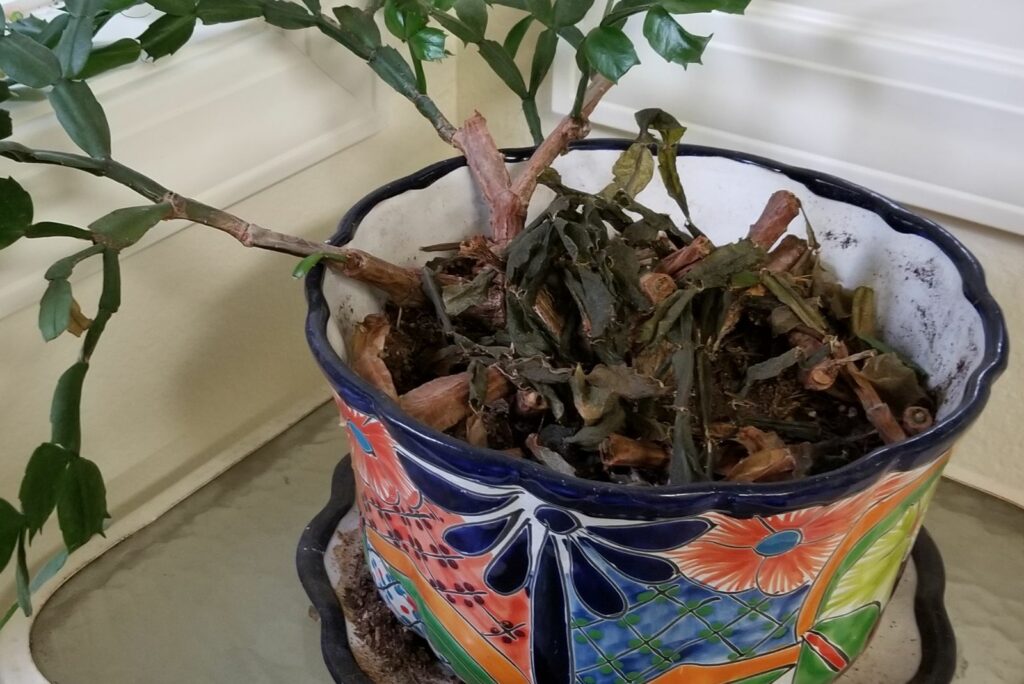
Phytophthora blight is a water mold disease that can wreak havoc on Christmas cactuses, especially in overly saturated soils. (6)
