Get the latest tips, exclusive gardening secrets, and insights for FREE straight to your inbox!
We use your personal data for interest-based advertising, as outlined in our Privacy Notice.
As mentioned before, overly wet soils are the ideal environment for pathogens, so your first task is to water your Christmas cactus according to a recommended schedule.
So, always check the moisture level in the soil using either your finger or a moisture meter. Water when the Christmas cactus soil is about 2 inches dry below the surface.
Additionally, make sure you put your holiday cactuses in planters that have drainage holes.
How To Treat
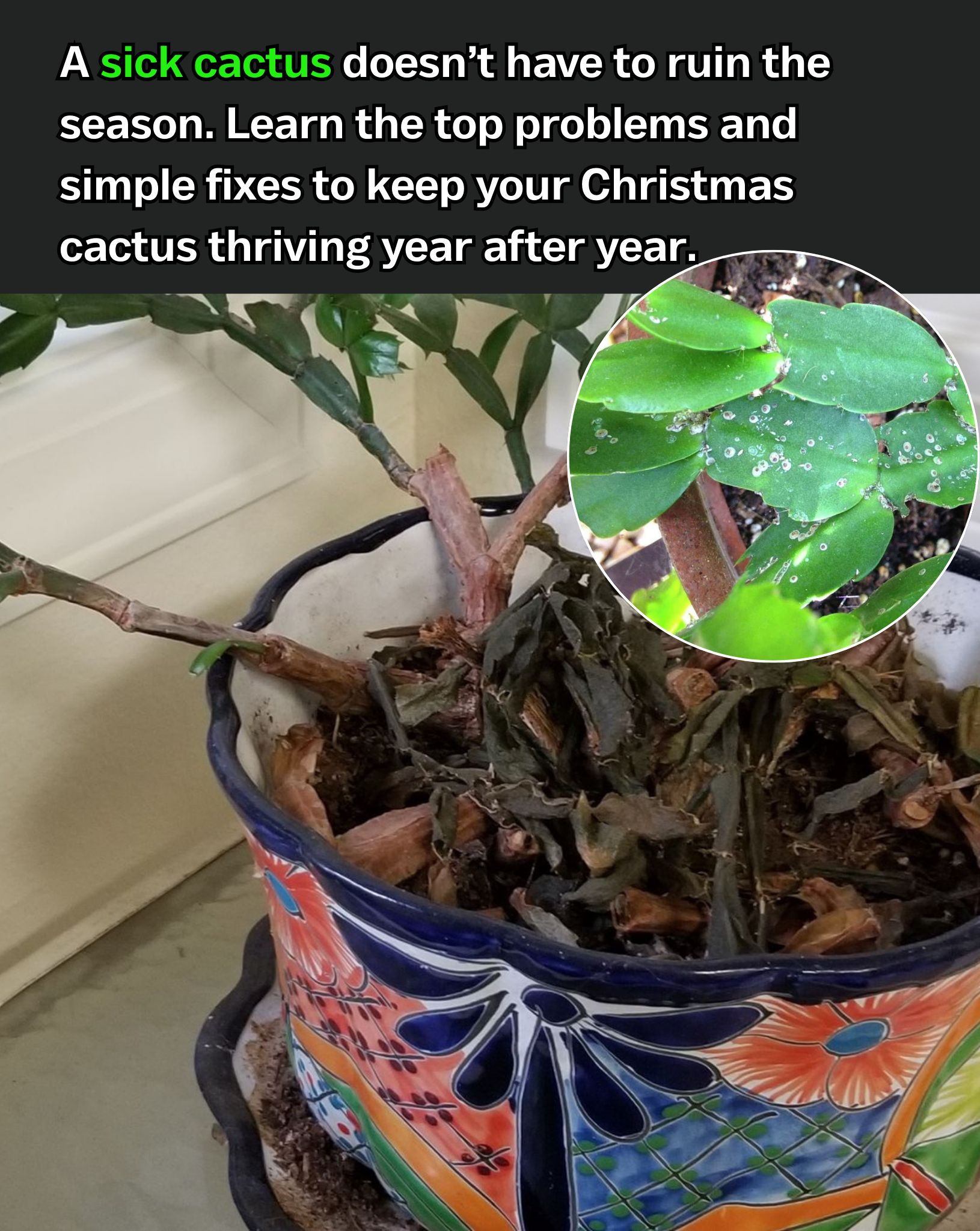
If your Christmas cactus is already displaying root rot symptoms, there is a way to revive it.
First, you need to take the plant out of its pot and cut off all the diseased and discolored roots. It’s essential to use sharp and sanitized tools because you don’t want the disease to spread.
Thoroughly sanitize the container (old or new) and add a free-draining and porous growing substrate.
Don’t feed your Christmas cactus after repotting to help it adjust and recover more easily.
2. Stem Rot
Another disease that can occur in this holiday cactus is basal stem rot, commonly known as stem rot. (2)
How To Identify
If your Christmas cactus suffers from this disease, it will first display a brown spot on the stem closest to the soil line.
The disease will soon progress and the spot will turn tan and the plant will slowly start losing tissue.
Yellowing and wilting are also symptoms of stem rot, as well as brown spots that look like water lesions on the plant foliage.
How To Prevent
Prevention methods are similar to those of root rot disease, so be very careful when watering your Christmas cactus.
It’s better to leave the growing substrate on the drier side than to add water to already wet soil.
How To Treat
If your Christmas cactus is already suffering from stem rot, you can treat it with fungicide, such as copper fungicide.
You can also remove some damaged tissue using a sanitized pair of scissors, but leave as many healthy plant parts as possible.
I also recommend saving a few healthy Christmas cactus cuttings and propagating them.
3. Botrytis Blight
Even though Botrytis Blight is a common garden fungal disease, it can also affect ornamental plants. Decaying foliage and soil moisture are the favorite sources of food for the fungus that leads to this disease. (3)
How To Identify
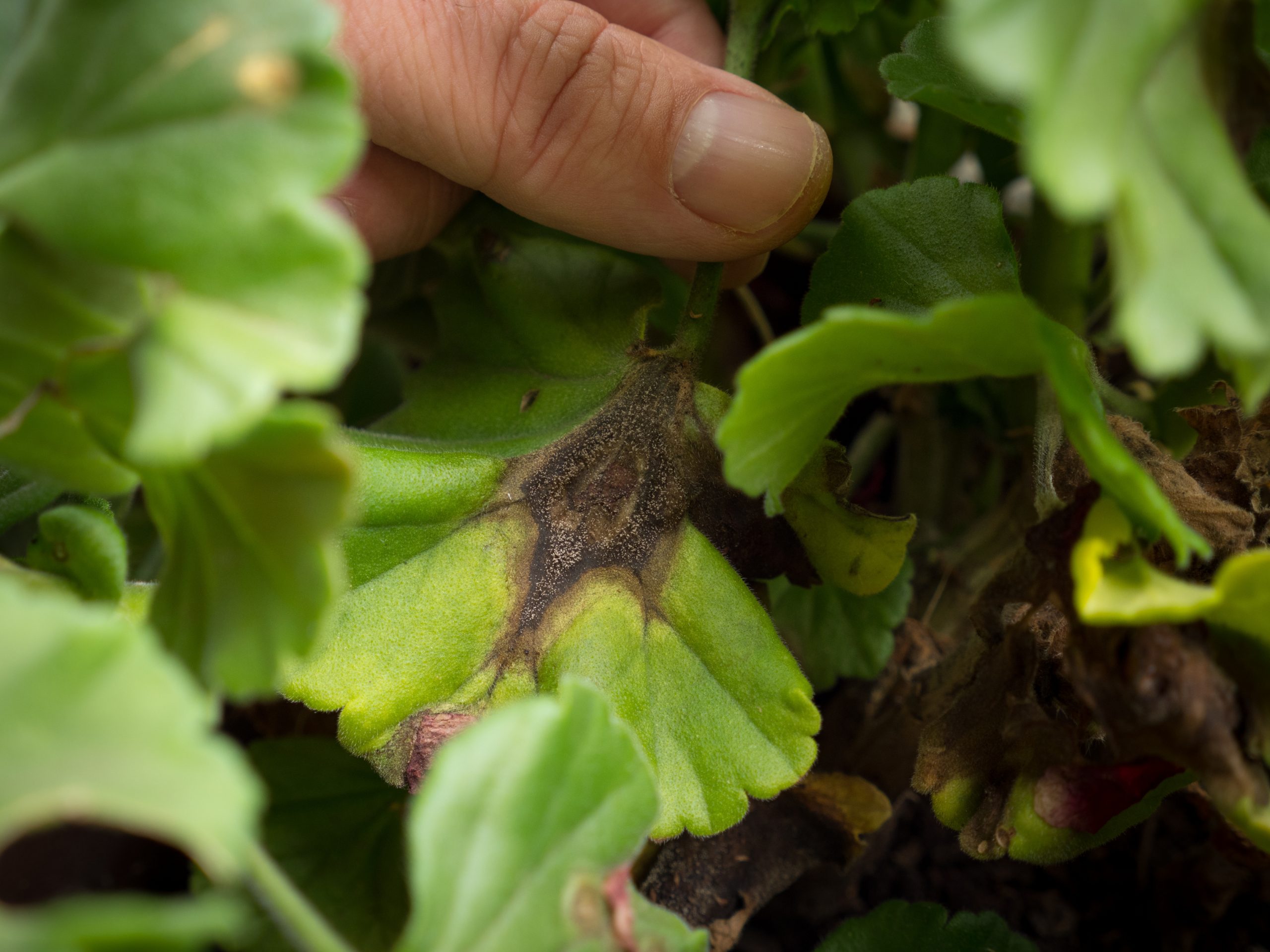
Christmas cactus that has grey mold aka Botrytis Blight will first display grey and fuzzy growth. This can occur in all plant parts, including stems, blossoms, and foliage.
It’s not uncommon for a holiday cactus with grey mold to display fuzzy growth on the surface of the soil.
How To Prevent
High humidity is most commonly the culprit for grey mold but the problem is that this holiday cactus likes some humidity.
What to do? First, always remove any fallen blossoms or leaves and prune your Christmas cactus if there are some unhealthy stems.
Good air circulation is crucial so keep your holiday cactus away from other houseplants.
When irrigating, make sure you don’t pour water over the foliage of your Christmas cactus.