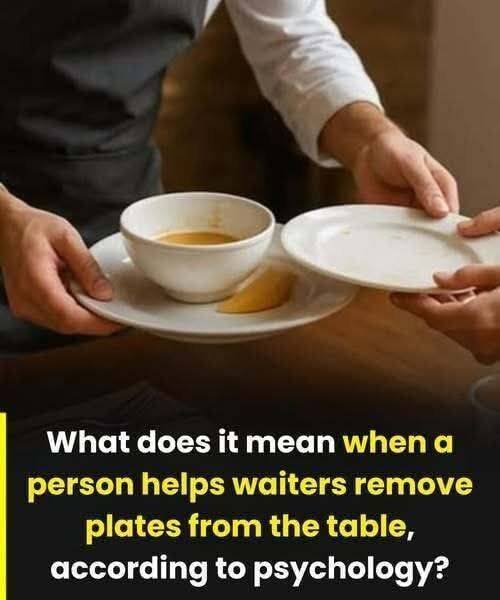
Psychologists rely on the Big Five Personality Traits to understand consistent patterns in behavior. These five dimensions—openness, conscientiousness, extraversion, agreeableness, and neuroticism—can help explain why someone might help a waiter.
People scoring high in agreeableness tend to be compassionate, cooperative, and eager to avoid conflict. Helping a server falls perfectly in line with their predisposition toward pro-social behavior.
Conscientious Individuals
Those who score high on conscientiousness—organized, reliable, and thoughtful—are more likely to notice messes, anticipate needs, and contribute to group order. They may help the waiter not just out of empathy, but because they dislike chaos or inefficiency.
Low Neuroticism
People with low neuroticism (emotionally stable) are more comfortable engaging with strangers, less worried about how they’ll be perceived, and more relaxed in social settings—making them more likely to act naturally helpful.
4. Power Dynamics and Status Awareness
Contrary to popular belief, helping behavior doesn’t always reflect equality. In some cases, it subtly reinforces social hierarchies and personal power.
Altruism or Dominance?
Helping someone in a lower-status role can also be an unconscious way of asserting dominance while appearing generous. In social psychology, this is called benevolent superiority—doing a kind act in a way that reinforces one’s elevated position.
For instance, a manager dining with junior employees may help the waiter to signal humility, while subconsciously reminding the group of their control over the interaction.
True Equality vs. Symbolic Gestures
There’s also a difference between authentic equality—treating the waiter as a peer—and symbolic equality, where the help is performative or designed to be noticed. One indicates genuine moral alignment, while the other is often a social signaling strategy.
5. Social Mirroring and Group Dynamics
Humans are inherently social creatures. Much of our behavior is influenced by observing and mimicking those around us. This is known as social mirroring, a cornerstone of group psychology.
Behavioral Contagion
If one person at the table starts stacking plates or handing over silverware, others may follow suit—not because they planned to, but because mirroring behavior helps maintain group cohesion.
Leadership and Influence
Those who initiate the gesture often hold subtle social influence. Helping the waiter can be a power move wrapped in humility—subconsciously telling the group, “I lead with kindness.” In high-stakes settings like business lunches or networking events, this can have strategic implications.
6. The Economics of Human Behavior: Signaling Generosity
