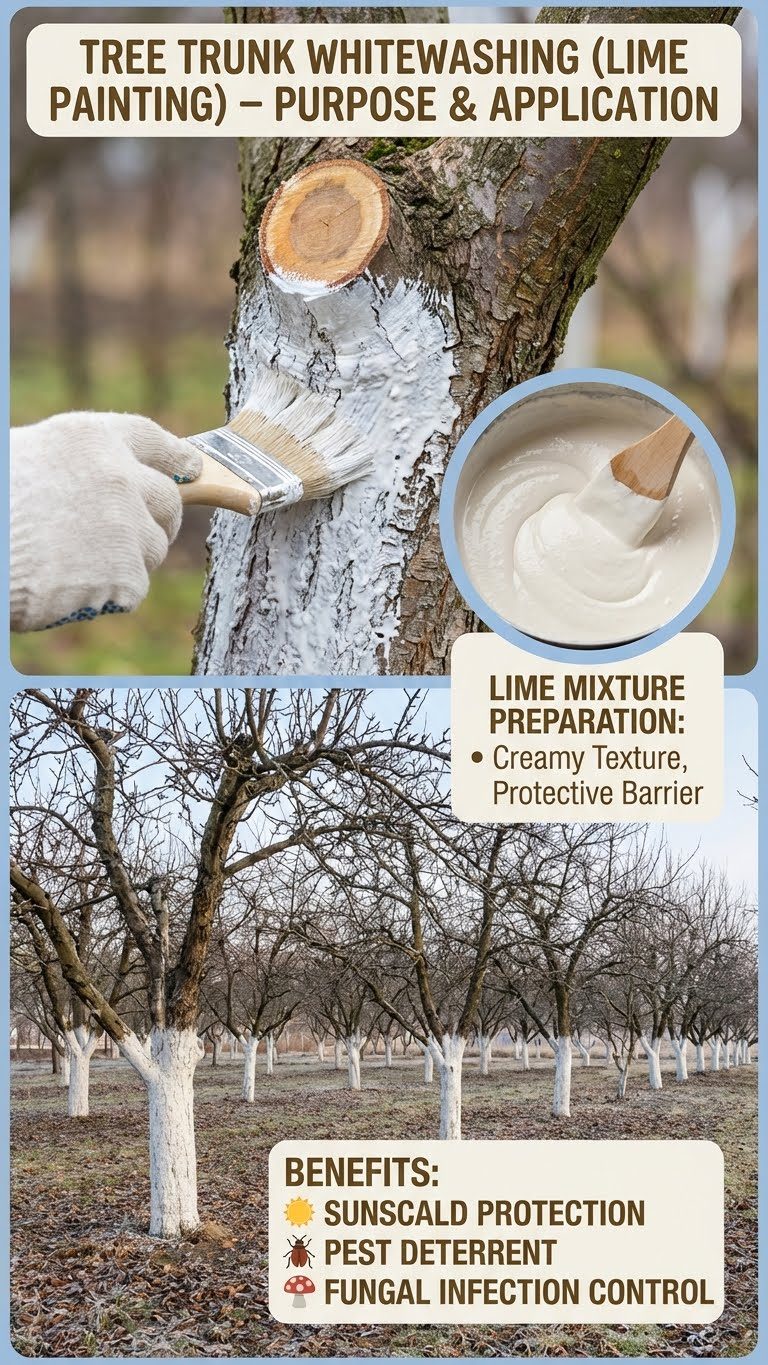
🌳 The Craft of Whitewashing Fruit Trees
White trunks aren’t just a nostalgic aesthetic from old orchards and countryside postcards — they’re a practical, inexpensive, and surprisingly elegant way to keep fruit trees healthy. If you’ve ever wondered why gardeners bother with whitewashing their trees, here’s the secret behind this age-old tradition. 🌿
✨ Benefits of Whitewashing Fruit Trees
- 1️⃣ Prevents Winter Bark Cracks: A coat of whitewash reflects sunlight, preventing uneven heating of the trunk during winter. Without it, the sunny side expands while the shaded side stays cold, causing the bark to crack. (Trust me, hearing a tree crack in January is a shock!)
- 2️⃣ Slows Early Blooming: Whitewash helps keep the trunk slightly cooler in early spring, offering up to a week of extra protection. This brief delay can make the difference between healthy blossoms and frostbitten flowers.
- 3️⃣ Deters Pests and Disease: The lime-based wash creates an alkaline surface that fungi, bacteria, and insects don’t enjoy. It acts as a natural, gentle barrier to many common tree pests and diseases. Pro tip: Add a tiny sprinkle of copper salts for an extra antifungal boost — but don’t overdo it unless you want a blue tree!
- 4️⃣ Guards Against Sunscald: Bare or young trunks are vulnerable to sunburn, especially in winter when sunlight bounces off snow. A light whitewash acts as a botanical sunscreen, shielding delicate bark from harmful rays.
- 5️⃣ Instantly Beautifies Your Garden: Not only is whitewashing functional, but it also gives your orchard or yard a fresh, clean look. The whitewashed trunks catch the light beautifully, making your garden feel crisp, neat, and storybook-perfect.
