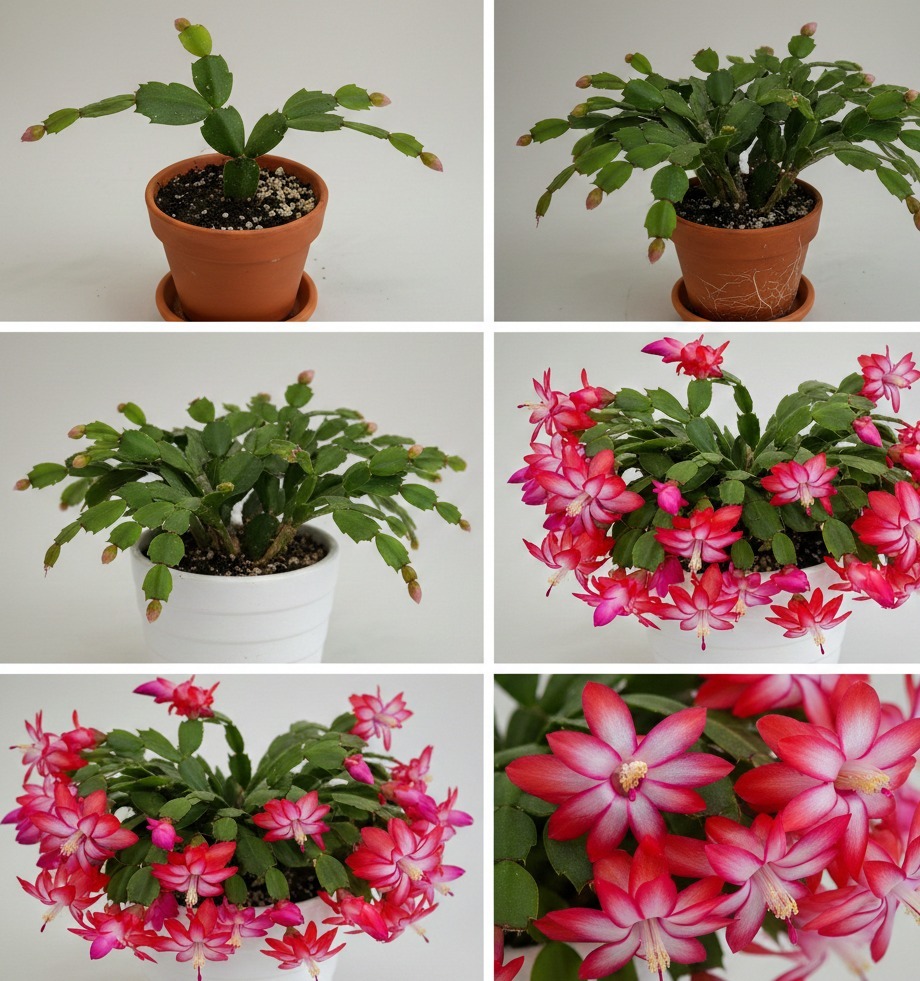
There’s something truly magical about a Christmas cactus (Schlumbergera), especially when its bright red or pink flowers burst open during the festive season. With its elegant, cascading stems and exotic blossoms, it brings warmth and color to any home just when the world outside feels cold and gray. But how can you make your Christmas cactus bloom beautifully and on time every year? The answer lies in understanding its unique needs — and in one surprisingly simple ingredient that helps trigger flowering naturally.
The Unique Beauty of the Christmas Cactus
Unlike the desert cacti that thrive in arid heat, the Christmas cactus comes from the cool, misty forests of Brazil. It grows high up in the trees, where it enjoys filtered sunlight, moderate humidity, and constant moisture from the air. Because of its tropical origin, this cactus behaves very differently from the prickly varieties we usually imagine. It doesn’t like direct sunlight or extreme dryness — instead, it prefers soft light, mild temperatures, and regular watering.
The Christmas cactus has become one of the most popular holiday plants, both as a decoration and as a meaningful gift. Its long life, easy care, and vibrant blooms make it a favorite among beginners and plant lovers alike.
When the plant blooms, the ends of its stems are covered in elegant, bell-shaped flowers with bright petals and arrow-shaped stamens at the center. The effect is striking — a burst of color just in time for Christmas.
Light, Temperature, and Water: The Golden Rules
To keep your Christmas cactus happy, the first rule is light. Indoors, it should be placed in a bright area near a window but never under direct sunlight, which can scorch its delicate segments. Outdoors, it thrives in a shaded, cool spot protected from the wind.
Temperature is another important factor. The ideal range is between 20°C and 25°C (68°F–77°F). The plant dislikes cold drafts, so keep it away from doors, windows that open often, or air conditioners. Stability is key — sudden changes can shock the plant and cause buds to fall off before blooming.
Watering should be moderate and consistent. During autumn and winter, watering once a week is enough. In spring and summer, increase to every four or five days, depending on how quickly the soil dries. A good technique is to pour water into a dish under the pot and let the plant absorb what it needs from below. This method prevents the soil surface from becoming too wet and helps avoid root rot.
The Secret Ingredient for Magical Blooming
